
Medical Botox
Botulinum Toxin (Botox) for TMJ & Masseter Pain
Masseter Relaxation for TMJ Pain, Clenching & Jaw Tension
Consultation required · Exact pricing at consultation
There is a muscle on the side of your jaw, the masseter, that is one of the strongest muscles in the human body relative to its size. Its job is chewing. Simple enough.
But for many people, that muscle has taken on a second, involuntary job: holding tension. Grinding teeth at night. Clenching during stress. Bracing through the day without any conscious awareness that it is happening.
Over time, a masseter that is chronically overactive does not just ache; it remodels. It enlarges. It can alter the shape of the lower face. It can create headaches that start at the temples and radiate through the jaw. It can make eating, yawning, or simply opening your mouth feel like a significant effort.
This is temporomandibular disorder, often called TMJ, and it is more common than most people realize. The good news is that there are options worth talking through.
Botox is one brand of botulinum toxin. Neither Botox nor Xeomin is authorized in Canada for jaw clenching or TMJ, so using either one for this is off-label. Where muscle tension is a major part of the problem, many people notice less tension. Difficulty chewing is uncommon but possible, so a personalized consultation covers whether it suits you and any concerns. Your physician assesses your jaw first and reviews which product to use.
SCHEDULE A FREE CONSULTATION
🔒 Your information is private, encrypted, and handled in
compliance with PIPEDA & PHIPA. We will never share
your personal data.
About This Treatment
How Botulinum
Toxin Helps
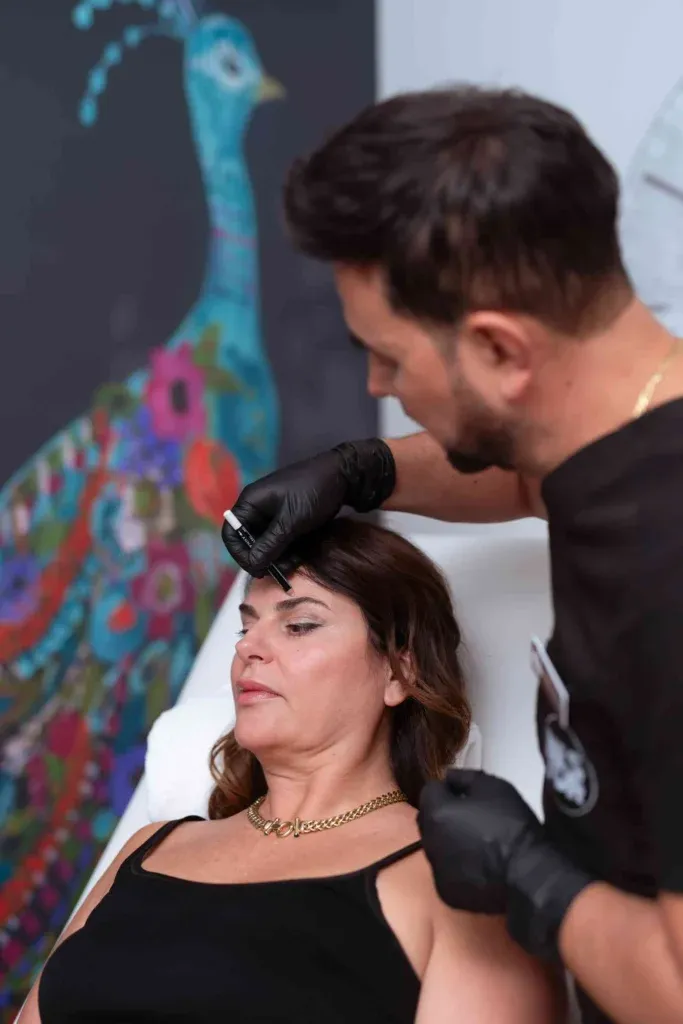
When we inject a small amount of botulinum toxin into the masseter, we temporarily reduce how much force that muscle can generate. We are not paralyzing it: most people still chew, speak and move the jaw normally. Difficulty chewing is uncommon but possible. Think of a muscle that has been sprinting for years without a rest day; we are turning the volume down. Where muscle tension is a major part of the problem, many people notice less tension through the jaw, the temples and the base of the skull. Over repeated treatments, the masseter can also become smaller, which may soften a square-looking jawline. We want to be clear that this is a side effect of the medical treatment, not its goal; we mention it because people often notice it and want to understand why.
The Process
How Does It Work?
1
Assessment
Evaluation of jaw tension, clenching patterns, and masseter size.
2
Injection
A small number of carefully placed injections directly into the masseter muscle on each side. Takes about 10 to 15 minutes.
3
Recovery
Little to no downtime. Avoid very hard or chewy foods for the first 24 hours.
4
Results
Changes usually begin within 2 to 4 weeks. The full effect, including any change in muscle size, may take 6 to 8 weeks. Treatment is usually repeated every 4 to 6 months, depending on how long it lasts for you.
The Process
How Does It Work?
1
Preparation
1
I
Assessment
Evaluation of jaw tension, clenching patterns, and masseter size.
2
I
Injection
Little to no downtime. Avoid very hard or chewy foods for the first 24 hours.
3
I
Recovery
Each visit takes about 20 to 30 minutes including your assessment; the injections themselves take 10 to 15 minutes, with no sedation.
4
I
Results
Changes usually begin within 2 to 4 weeks. The full effect, including any change in muscle size, may take 6 to 8 weeks. Treatment is usually repeated every 4 to 6 months, depending on how long it lasts for you.
Why Choose This Treatment
Benefits & Treatment Areas
Aims to reduce clenching force and jaw tension (an off-label use)
May gradually soften the jawline over repeated treatments
Little to no downtime
Non-surgical alternative
Where muscle tension is the main issue, many people notice less jaw and temple tension
Quick 10-15 minute treatment
Benefit may build with repeated treatments
May be eligible as a medical expense (ask your accountant)
Treatment Areas
Masseter Muscle (bilateral)
Symptoms
Symptoms That Bring People In?
Jaw pain and soreness, particularly in the morning after nighttime clenching or grinding (bruxism)
Headaches that originate at the temples or behind the eyes
Facial tension and tightness through the jaw and lower face
Tooth sensitivity and wear associated with grinding
Difficulty or discomfort opening the mouth fully
A sense of tightness or fatigue through the jaw muscles with normal activity
If you have been told by a dentist that you grind your teeth, or if you wear a nightguard, this conversation is worth having.
Coverage & Cost
Understanding Your Coverage Options
We want you to have a complete and honest picture of how costs work for this treatment, because
the insurance landscape can be genuinely confusing, and you deserve clarity before you book.
The Medication vs. The Treatment Fee
There are two separate costs with botulinum toxin treatment. The first is the medication itself. The second is the treatment fee: the physician's fee for the injections and the follow-up care. These two costs are billed separately, and they are covered (or not covered) separately. Your consultation itself is complimentary.
Private Drug Insurance: What May Be Possible
Because using botulinum toxin for jaw clenching is off-label, most private drug plans don't cover the medication for this use. Every plan is different, so it's still worth asking your insurer directly whether botulinum toxin for jaw clenching or TMJ is a covered benefit, and whether a pre-authorization is required.
If Coverage Is Declined
If your plan declines coverage, or you don't have a private drug plan, the medication is paid privately. We'll talk through the product options and their costs with you, including Botox and Xeomin, and you'll know the full cost before any treatment goes ahead.
The Treatment Administration Fee
The physician's fee for the treatment (the injections and the follow-up) is a separate charge from the medication; your consultation is complimentary. In our experience, this fee is rarely covered by private insurance plans, whatever the reason for treatment.
Medical Tax Deductions
Because TMJ is a medical condition rather than a cosmetic concern, the costs of medically indicated treatment (the medication and the treatment fee) may be eligible as a medical expense on your Canadian tax return. Keep your receipts, and we'll provide the documentation you need. Your accountant can confirm what applies to you.
A Note on Off-Label Use
Here is something important to understand about jaw clenching and masseter pain specifically: botulinum toxin is not approved by Health Canada for this use, so it is considered off-label. Off-label means a medication is used for a purpose that isn't listed in its Health Canada approval; it does not mean experimental or unsafe, and off-label prescribing is accepted medical practice when it's appropriate for the patient. We offer it because there is published evidence for its use in jaw clenching and masseter pain, although most studies are small, and where muscle tension is a major part of the problem, many people notice less tension. The practical consequence is real, though: most private drug plans won't cover the medication for this use. In our experience, coverage is rare and usually comes through a Health Spending Account (HSA), an employer benefit that lets you spend a set amount on health expenses more flexibly than a traditional drug plan. If you have an HSA, this treatment may be eligible, and we're happy to provide the documentation you need.
Integrity in the Insurance Process
If your medication is approved and covered by your drug plan for a specific medical condition, that coverage applies only to treating that condition, as documented, prescribed and administered. Medication covered under a drug plan cannot, under any circumstances, be redirected toward cosmetic use; that would be insurance fraud, with serious legal and professional consequences for everyone involved. Pre-authorization forms are legal documents and must be completed honestly and accurately, so any misrepresentation of a patient's clinical situation, however well-intentioned, is not something we can take part in. Our commitment is to help you get the coverage you legitimately qualify for, through a process that is completely above board.
What Is a Preauthorization Form?
A pre-authorization form is a document your insurance company requires before it will approve coverage for certain medications. It sets out the medical criteria the insurer requires for the medication to be considered medically necessary under your plan. Your physician completes the form based on your clinical history and current situation. If you meet the insurer's criteria, coverage is approved; if not, coverage is declined and the medication is paid privately. If your insurer requires one, let us know and we'll work through it with you.
Got Questions?
Frequently Asked Questions
Will I still be able to chew normally?
Most people chew, speak and move the jaw normally after treatment. Difficulty chewing is uncommon but possible, so your personalized consultation covers this and any other concerns before you decide.
Is this covered by insurance?
Because using botulinum toxin for jaw clenching is off-label, private drug plans rarely cover it. If you have a Health Spending Account, the treatment may be eligible. Contact your plan provider to confirm.
What does 'off-label' mean?
Off-label means a medication is used for a purpose that isn't listed in its Health Canada approval. It does not mean experimental or unsafe, and off-label prescribing is accepted medical practice when it's appropriate for the patient. Using botulinum toxin for jaw clenching is off-label. Where muscle tension is a major part of the problem, many people notice less tension, and your physician reviews the evidence and risks with you.
How long do results last?
Results typically last about 4 to 6 months. With repeated treatments, some people find the interval extends.
I wear a nightguard. Should I still consider this?
If you have been told by a dentist that you grind your teeth, or if you wear a nightguard, this conversation is worth having. The nightguard protects teeth but does not address the muscle tension itself.
Explore More
Related Treatments & Conditions
BOTOX & XEOMIN
Botulinum Toxin: Non-Surgical Wrinkle Relaxation
Learn More >
MEDICAL BOTOX
Therapeutic botulinum toxin for medical conditions beyond cosmetics.
Botox for Chronic Migraine >
Botox for Hyperhidrosis >
Ready to get started?
Book a complimentary consultation and let our team
create a personalized plan for you.
Serving Aurora & York Region
Serving Aurora & York Region
STAY IN THE KNOW
Offers, plus longevity, hormone and skin care tips, delivered to your inbox.

Customized strategy. Personalized testing. Physician-led aesthetic care planned for a natural look. All of it, built around you.
VISIT US
© 2026 Thrive! MedAesthetics + Wellness. All rights reserved.