
Women’s Intimate Health
Fractional CO2 Vaginal Laser Resurfacing in Aurora
CO2 Laser Rejuvenation: Restore Vaginal Health
Starting at $833/session in package, $1,000 individual session
Vaginal CO2 laser resurfacing is a short, in-office treatment. A fractional CO2 laser makes tiny, controlled wounds in the vaginal tissue so the body’s own repair process can promote healing and turnover of that tissue. Thrive! offers this vaginal laser in Aurora, and care always begins with a private, physician-led consultation. Results vary.
Let’s Talk About It
Changes in intimate comfort are some of the most common concerns women carry through perimenopause and the years after menopause, and some of the least talked about. Many women wait years before mentioning them, or bring them up on the way out the door. We’d rather you didn’t have to.
At Thrive!, nothing is “too much information.” These are physical changes with physical explanations, and they deserve the same calm, practical attention as any other part of your health. Your visit happens in a private room, with a physician-led team that talks about pelvic and intimate health every day.
Medically reviewed by Amber Bocknek, MD, CCFP, ABAARM, FAAMM, MSCP, Medical Director, November 3, 2026
SCHEDULE A FREE CONSULTATION
🔒 Your information is private, encrypted, and handled in
compliance with PIPEDA & PHIPA. We will never share
your personal data.

About This Treatment
What Is Vaginal CO2 Laser Resurfacing?
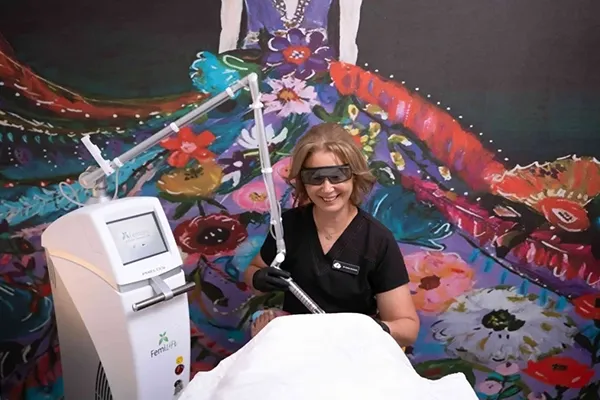
A fractional CO2 laser makes a pattern of tiny, controlled wounds in the vaginal tissue, leaving the tissue around each one intact. As these heal, the body’s repair process promotes healing and turnover of the tissue. Whether it suits you, what to expect and the possible risks are reviewed at a private consultation. Results vary.
Think of how a lawn is aerated: small, evenly spaced openings, with healthy ground left in between so the repair work can start from the edges. “Fractional” means the laser treats a fraction of the surface at a time in exactly that pattern. The treatment is delivered through a slim, specialized probe and takes about 15 to 20 minutes.
Using a fractional CO2 laser for vaginal treatment is an off-label use: it falls outside the uses the device is licensed for by Health Canada. Your physician explains what that means for you at your consultation, along with the evidence, the risks and your other options.
Also called: vaginal laser, CO2 vaginal laser, intimate laser treatment, vaginal laser resurfacing
The Process
What to Expect From a CO2 Vaginal Laser in Aurora
1
Consultation
A private, compassionate conversation about your concerns, your health history and your goals. Your physician explains what the treatment involves, the possible risks and the other options available, so you can decide what feels right for you.
2
Treatment
A slim laser probe is gently inserted and moved through the vaginal canal while the fractional CO2 laser delivers its pattern of tiny, controlled treatment zones.
3
Duration
About 15 to 20 minutes. Most women describe a mild warming sensation, and the treatment is generally well tolerated without anesthesia.
4
Recovery
Most women return to their usual activities the same day. Mild sensitivity for a day or two can occur, and we recommend avoiding intercourse for a few days afterward. Your physician gives you written aftercare instructions.
5
Your Plan
A series of 3 sessions, spaced 4 to 6 weeks apart, is typically recommended, sometimes followed by yearly maintenance. Your physician-led team suggests a plan after your consultation. Results vary from person to person.
The Process
What to Expect From a CO2 Vaginal Laser in Aurora
1
Preparation
1
I
Consultation
A private, compassionate conversation about your concerns, your health history and your goals. Your physician explains what the treatment involves, the possible risks and the other options available, so you can decide what feels right for you.
2
I
Treatment
A slim laser probe is gently inserted and moved through the vaginal canal while the fractional CO2 laser delivers its pattern of tiny, controlled treatment zones.
3
I
Duration
About 15 to 20 minutes. Most women describe a mild warming sensation, and the treatment is generally well tolerated without anesthesia.
4
I
Recovery
Most women return to their usual activities the same day. Mild sensitivity for a day or two can occur, and we recommend avoiding intercourse for a few days afterward. Your physician gives you written aftercare instructions.
5
I
Your Plan
A series of 3 sessions, spaced 4 to 6 weeks apart, is typically recommended, sometimes followed by yearly maintenance. Your physician-led team suggests a plan after your consultation. Results vary from person to person.
Why Choose This Treatment
At a Glance
In-office treatment of about 15 to 20 minutes
Treats mild urinary incontinence
Generally well tolerated without anesthesia
Most women return to usual activities the same day
A few days without intercourse afterward
Increases natural lubrication
Usually a series of 3 sessions, 4 to 6 weeks apart
Private, physician-led care from consultation to follow-up
Results vary
Boosts confidence and comfort
You may want to ask about it if you are:
Is Vaginal Laser Treatment Right for You?

Noticing changes in intimate comfort through perimenopause or after menopause
Already working on pelvic health with the B-Pulse chair or with hormone care, and want to talk about another option
Looking for a private, physician-led conversation about what is available
It may not suit you if you are pregnant, have an active vaginal or urinary infection, have unexplained bleeding, or have certain cancers or are in cancer treatment. Your physician reviews your health history with you before anything is booked.
Fractional CO2 Vaginal Laser Resurfacing at a Glance
Feature
CO2 Vaginal Laser
MonaLisa Touch / ThermiVa
Technology
Fractional CO2 laser: precise thermal zones
Fractional CO2 (MonaLisa) / Radiofrequency (ThermiVa)
Treatment Time
15 to 20 minutes
5 minutes (MonaLisa) / 30 minutes (ThermiVa)
Sessions Needed
3 sessions, 4 to 6 weeks apart
3 sessions (MonaLisa) / 3 sessions (ThermiVa)
Downtime
Usually minimal, 1 to 2 days of mild sensitivity
1–2 days (MonaLisa) / None (ThermiVa)
This comparison is for education only. The right treatment for you depends on your anatomy, goals and medical history, and a consultation with our physician-led team helps you choose.
Got Questions?
FAQ
What is fractional CO2 vaginal laser resurfacing?
A fractional CO2 laser makes a pattern of tiny, controlled wounds in the vaginal tissue, leaving the tissue around each one intact. As these heal, the body’s repair process promotes healing and turnover of the tissue. Whether it suits you, what to expect afterward and the possible risks are reviewed at a private consultation. Results vary.
Is the treatment painful?
Most women describe a mild warming sensation, and the treatment is generally well tolerated without anesthesia. The slim probe is moved gently through the vaginal canal, and treatment takes about 15 to 20 minutes. Mild sensitivity for a day or two can occur afterward, and your physician gives you written aftercare instructions.
How many treatments do I need?
A series of 3 treatments, spaced 4 to 6 weeks apart, is typically recommended, sometimes followed by yearly maintenance. Our physician-led team advises on a plan after your consultation, and results vary. Your plan may also include other care, such as pelvic floor work or hormone care, depending on what your assessment shows.
What are the risks of vaginal CO2 laser treatment?
Like any procedure, it has risks and side effects, which your physician reviews with you at a private consultation before you decide. The most common are temporary discomfort, spotting, discharge or sensitivity. Less often, burns, scarring, infection or ongoing pain, including pain with sex, have been reported with vaginal energy-based treatments.
What does research show about vaginal CO2 laser treatment?
Research is still developing. Some reviews report improved symptoms and satisfaction compared with a sham (placebo) treatment, while several well-designed trials found similar results with laser and sham. That is why our physician-led team presents vaginal CO2 laser resurfacing as one option within a wider plan, and talks through what to expect, the risks and the other choices before you decide.
Explore More
Related Treatments & Conditions
Conditions This Treats
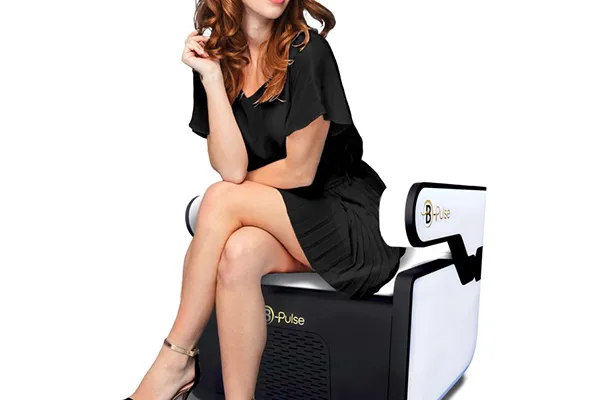
B-Pulse for Women
Pelvic floor muscle contractions while you sit fully clothed
Learn More >
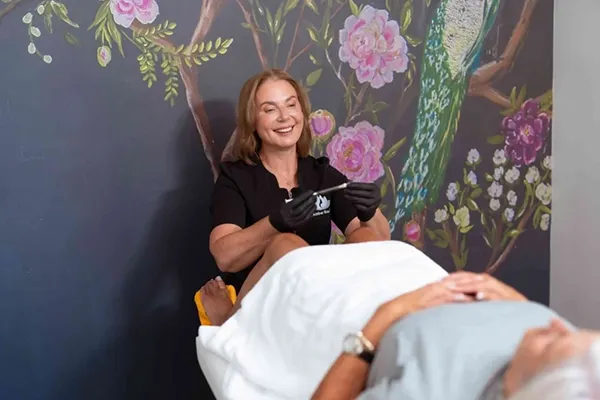
PRP for Women’s Intimate Health
Prepared from a small sample of your own blood
Learn More >

Personalized Hormone Program for Women
Physician-led hormone care built on comprehensive testing
Learn More >
How Does It Fit With Your Other Care?
Intimate comfort rarely has a single cause, so we rarely look at it through a single lens. Depending on what your assessment shows, vaginal CO2 laser resurfacing can be planned alongside:
The B-Pulse chair. Picture the pelvic floor as a trampoline that holds the pelvic organs up. The B-Pulse chair uses a pulsed electromagnetic field to produce about 13,000 pelvic floor muscle contractions in a session of about 30 minutes, while you sit fully clothed.
Hormone care. Hormone changes are a common reason intimate tissue changes. Our physician-led hormone program starts with comprehensive testing, and your physician can also discuss local options such as vaginal estrogen.
PRP for women’s intimate health. Platelet-rich plasma, prepared from a small sample of your own blood, is another option your physician may discuss.
Serving Aurora & York Region
Serving Aurora & York Region
STAY IN THE KNOW
Offers, plus longevity, hormone and skin care tips, delivered to your inbox.

Customized strategy. Personalized testing. Physician-led aesthetic care planned for a natural look. All of it, built around you.
VISIT US
© 2026 Thrive! MedAesthetics + Wellness. All rights reserved.